Amol K Patil: Passing the fugitive onBerlin BiennaleBerlin, Germany
Amol K Patil approaches Sophiensæle’s early years as a space of intensive political and cultural activity during its time as the headquarters of the Berlin Craftsmen’s Association. He explores this through the “BDD Chawls” (Bombay Development Department): special architecture used as social housing for trade union workers in Mumbai. These buildings—known for their cramped living conditions and communal bathrooms—were originally constructed by the British in the early twentieth century to house poor male migrant workers who toiled in factories or mines. Chawls were important spaces of political activism, both during the colonial period and after India’s independence in 1947. B. R. Ambedkar, the principal architect of the Constitution of India, lived here. The buildings were demolished and replaced by new ones several years ago as part of large-scale remodeling and upgrading projects.
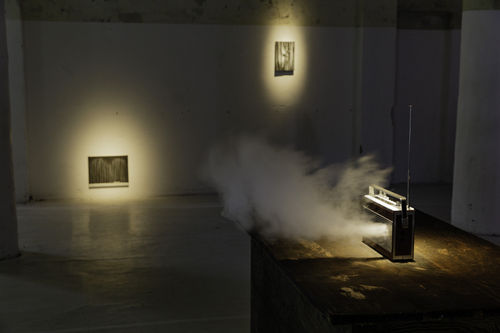
A radio plays fiery speeches, but then combusts into a cloud of smoke. B. R. Ambedkar, Rosa Luxemburg, Karl Liebknecht, and the workers’ movement itself are linked in the drawings on the walls. The theater of the social and its political dimension unfolds.
Text: Kito Nedo.


