
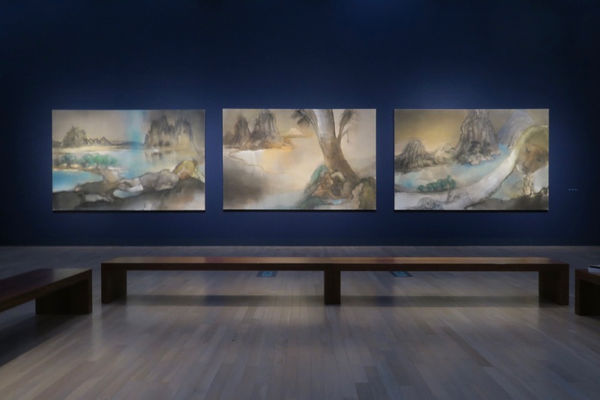
It’s not about portraying any place. But we are part of the landscape, and we are landscape as well. Because when I’m really close to your face, I start to see mountains, and lakes. We can find landscape everywhere, and this inspires me. Also my memory inspires me, so when I start to make drawings, or make a certain movement, it can end up being a landscape. I like the rhythm of the landscape, it feels like waves. The earth undulates, always changing. It takes thousands of years, butt that's the way it is. It changes. That attracts me. I don’t paint objective mountains, or lakes. What I do is my act, because we have undulating rhythms in our selves. We are all cats, and landscapes, and girls.
- Leiko Ikemura, catalogue Motion of Love.
-
 Tata II (big), 2025
 -
Blue Mom, 2023
-
Birds Mom, 2023
-
Mamadonna dance, 2023
-
Dello, 2023
-
Pink Space, 2023
-
Tiger Appears, 2022


-
Pinochiette dans les Alpes
With works by: Alÿs, Bas, Boehm, Boyer, Deplazes, Favre, González, Hänsli, Huen, Ikemura, Lee, Nielsen, Patil, Ribbeck, Rilliet, Rodríguez, Spichtig, Streuli, William
11-13 rue des Arquebusiers, Paris
10 Sep - 10 Oct 2026The gallery is delighted to present Pinochiette dans les Alpes , a group show bringing together 19 distinctive artistic voices in a rich and varied exploration of contemporary painting. Taking...Read more -
Leiko Ikemura
MotherscapeAlbertina Museum
Vienna, Austria
14 Nov 2025 - 6 Apr 2026This exhibition at the ALBERTINA presents a crosssection of the oeuvre of Leiko Ikemura (*1951 in Tsu, Japan). Known for poetically powerful works in which she unites Western and Eastern...Read more -
Leiko Ikemura
36th Bienal de São PauloSão Paulo, Brazil
6 Sep 2025 - 11 Jan 2026Entitled Not All Travellers Walk Roads – Of Humanity as Practice, the edition will be led by chief curator Prof. Dr. Bonaventure Soh Bejeng Ndikung together with his conceptual team...Read more -
Leiko Ikemura
The Sea in the MountainsBündner Kunstmuseum, Chur, Switzerland
23 Aug - 23 Nov 2025The Japanese-Swiss artist Leiko Ikemura (*1951) is considered one of the most important contemporary artists. In her paintings and sculptures, she explores the transitions between human beings and nature. Ikemura...Read more -
Leiko Ikemura
Floating SpheresKunsthalle Emden, Emden, Germany
23 Nov 2024 - 11 Mar 2025This show brings together seventy-five pieces that provide a cross-section of Leiko Ikemura's multifaceted creative output—from painting and graphic art, through photography and video, to sculpture. The works trace an...Read more -
Leiko Ikemura
Cosmic MomGalerie Peter Kilchmann
Zahnradstrasse, Zurich
30 Aug - 12 Oct 2024Leiko Ikemura Cosmic Mom August 30 - October 12, 2024 Zahnradstrasse 21, Zurich Galerie Peter Kilchmann is delighted to announce our upcoming third solo exhibition featuring new works by the...Read more -
Leiko Ikemura
Light on the HorizonHeredium Museum, Daejon, South Korea
24 Apr - 4 Aug 2024Read more -
Leiko Ikemura
When Animals Become ArtFuerle Collection, Berlin, Germany
6 Jul 2023 - 7 Jan 2024The exhibition will symbolically bring into being an intimate and colourful nest, where precious animal sculptures, made of cast glass, glazed terracotta, patinated bronze or papier-mâché, will interact with small...Read more -
Leiko Ikemura
Year of the UsagiMAZ Museo de Arte Zapopan, Guadalajara, Mexico
4 Feb - 25 Jun 2023Year of the Usagi conjures up a fantastical world, reflecting the dynamism with which the many different forms expressed in her work cross biographical, geographical, cultural, and artistic boundaries. The...Read more -
Leiko Ikemura
Georg Kolbe Museum, Berlin, Germany
21 Jan - 1 May 2023The exhibition is mainly dedicated to Ikemura’s sculptural work. The show features more than 30 sculptures and selected paintings and drawings since the 1990s, including numerous recent works. Her works...Read more -
Leiko Ikemura
New Girls ou Les Filles DifficilesGalerie Peter Kilchmann, Paris
15 Oct 2022 - 14 Jan 2023Entitled New Girls ou Les Filles Difficiles, Ikemura's exhibition takes up her perhaps best-known series of Girls, which first appeared in her work in the mid-1990s and has since become...Read more -
Leiko Ikemura
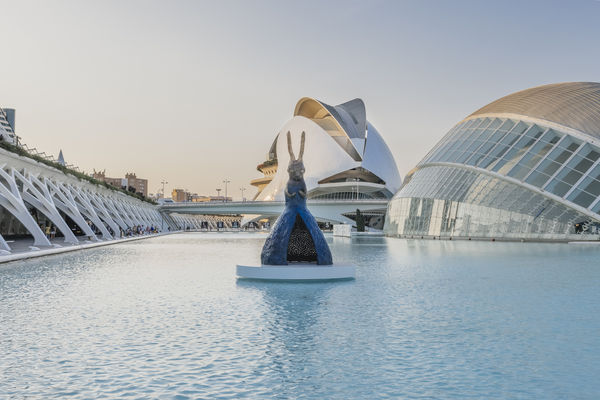
Here We AreCAC La Ciutat de les Arts i les Ciències, Valencia, Spain
30 Sep 2021 - 27 Feb 2022The exhibition is located on the southern lake of the Hemisfèric, seeming to float on the waters, and its presence is amplified by the surroundings where the buildings of the...Read more -
Leiko Ikemura
As Long as I’m WalkingSainsbury Art Center, Norwich, UK
18 Jul - 12 Dec 2021The exhibition explores the theme of nature and the connectivity of all forms of life, whether that be humans, animals, plants or minerals. There is both fragility and innocence in...Read more -
Leiko Ikemura
Even more tomorrowsCentro de Arte Caja de Burgos CAB, Burgos, Spain
5 Mar - 30 May 2021They are hybrid forms, as the artist herself points out, in which the use of materials close to the earth - ceramics, bronzes, pigments - reinforce the representation of beings...Read more -
Leiko Ikemura
Toward New SeasKunstmuseum Basel, Basel, Switzerland
11 May - 1 Sep 2019The Japanese-Swiss artist Leiko Ikemura first caused a stir in Switzerland in the early 1980s with expressive and confrontational compositions that associated her with the Neue Wilde. She later rose...Read more -
Leiko Ikemura
Our Planet - Earth and StarsThe National Art Center, Tokyo, Japan
18 Jan - 1 Apr 2019The introspective world of her work – quiet, modest, and immersed deeply in its own distinctive vision – is in this sense keenly critical of the world and society surrounding...Read more






-

Leiko Ikemura
Motherscape, 2025 2025 Read more -
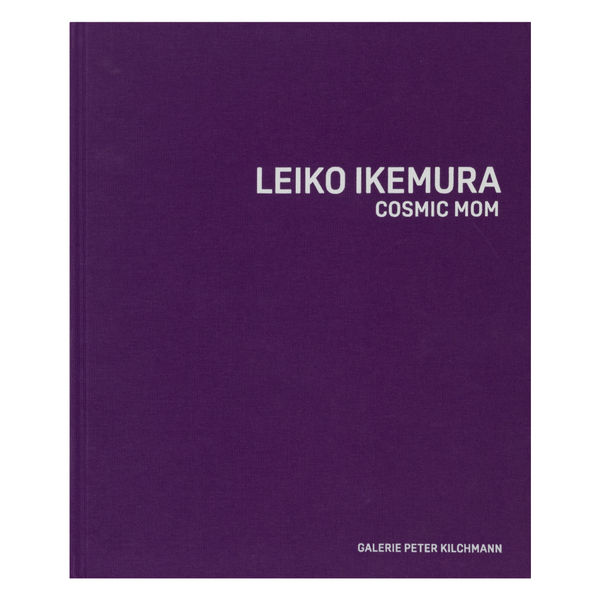
Leiko Ikemura
Cosmic Mom, 2025 Text by Bernard Blistène, 2025 Read more -
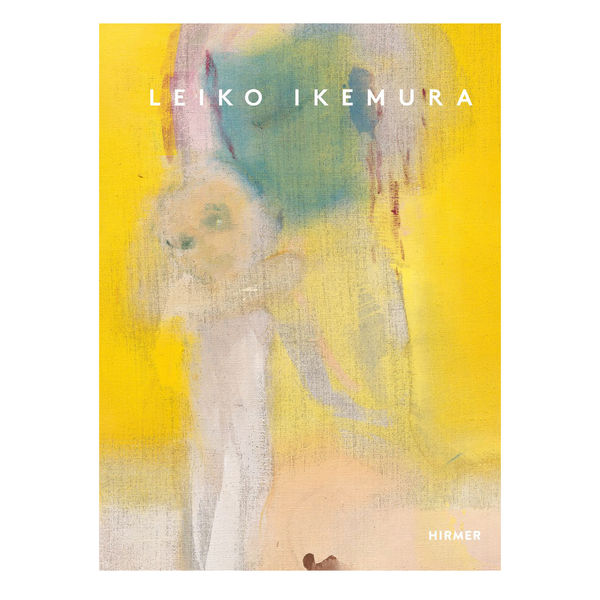
Leiko Ikemura
Floating Spheres, 2025 Authors: Lisa Felicitas Mattheis, Nils Ohlsenpublisher: Hirmer
, 2025 Read more -

Leiko Ikemura
Mein Weg mit der Kunst. Leiko Ikemura im Gespräch mit Noemi Smolik, 2024 2024 Read more -

Leiko Ikemura
Motion of Love, 2023 2023 Read more -

Leiko Ikemura
Wenn Pfauen Flügel öffnen, 2022 Texts by Leiko Ikemura, Brigitte Gerisch-Hölk and Anette HüschEdited by: Herbert Gerisch-Stiftung
Read more -

Leiko Ikemura
Año del usagi, 2023 Notes by: Leiko IkemuraEdited by: Viviana Kuri
Museo de Arte de Zapopan
Read more -
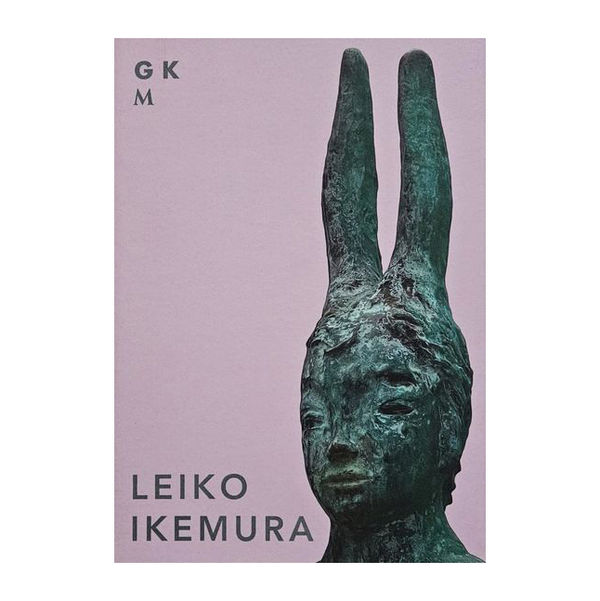
Leiko Ikemura
Witty Witches, 2023 Poem by Leiko IkemuraTexts by Elisabeth Heymer, Udo Kittelmann and Kathleen Reinhardt
George Kolbe Museum
, 2023 Read more -

Leiko Ikemura
Aquí Estamos, 2022 Texts by Kosme de BarañanCity of Arts and Sciences of Valencia, Spain
Read more -

Leiko Ikemura
Before Thunder, After Dark, 2021 Texts by: Fank Boehm, Quinn Latimer and Alessandro Rabottini Read more -

Leiko Ikemura
Aún más mañanas, 2021 Javier Del Campo, Viviana Kuri Haddad, Gonzalo Rodríguez Gómez, Mónica Álvarez Careaga, 2021 Read more -
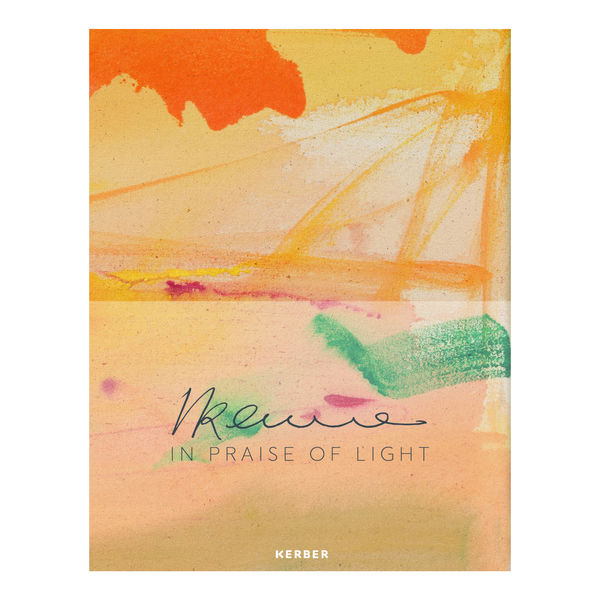
Leiko Ikemura
In Praise of Light, 2020 Texts by Leiko Ikemura, Nicola Kuhn, Hannes Langbein, Friedhelm Mennekes SJ, Pia Müller-Tamm and Alexander OchsEdited by Hannes Langbein and Alexander Ochs
Stiftung St. Matthäus, Berlin
Read more -

Leiko Ikemura
Von Ost nach Ost, 2020 Interview with Leiko IkemuraTexts by Cornelia Blume and Uwe Neumann
Kunsthalle Rostock
Read more -

Leiko Ikemura
Portraits, 2020 Texts by Nils Emmerichs and Bera Nordal Read more -

Leiko Ikemura
Paintings, 2019 Texts by Mayen Beckmann, Bibiana Beglau, Leiko Ikemura, Ivana Jeissing, Dalad Kambhu, Holger Liebs, Helge Malchow, Ayumi Paul, Wim Wenders Read more -

Leiko Ikemura
Our Planet, 2019 Leiko Ikemura, 2019 Read more -

Leiko Ikemura
Nach Neuen Meeren, 2019 Text by: Anita Hadelmann, Stefan Kraus, Mitsue NagayaKunstmuseum Basel, Switzerland
Read more


